My Friend Eric...
My friend Eric said, ‘oh, so you get engaged and your blog posts go way down?” Is he right? Probably a bit. I do have less time on my hands, and needed respite from the 24/7 365 project problem-solving life I’ve been living. And I do need the prompt here and again to help me keep my priorities straight.

I drive a lot, and on those drives I listen to podcasts and audiobooks. I like the Ramsey show a lot. It’s a personal finance show for dummies sort of thing - that’s not fair, since I’m no dummy and I learn a ton, even after listening for years. But it’s sort of your ‘grandmothers way of managing money’ - stay out of debt, buy what you can afford, save money, invest in what you know, let time do its magical compounding, don’t buy new cars. But, and I’ve mentioned this before, the dumbed down simplicity of the advice is helpful, but a few elements are harmful enough that I can’t always listen. Dave Ramseys knows a ton about a ton, and his small business insights are spot on, but to make his numbers work, he plays fast and loose with some important aspects of the reality of wealth building.

He takes his thing about cars too far. Yes, stay away from brand new cars and their insane depreciation unless you’re rich. But the idea that if you do find yourself with a car you can’t afford you should always ‘private sale’ it and that gets you a few thousand dollars more and that helps the get out of debt equation more. But if you’ve ever tried to private sale a vehicle, you know first-hand how difficult tedious and arduous that process can be, including the actual transfer of title, signing it in the right place, bill of sale. Yes, taking it to a dealer results in whole-sale pricing, but if you value your time, and actually the odds of success, that’s the route to go.

Also, the idea that you should buy a beater, a cheap cheap car until you are out of debt ignores the very true fact that a car that requires constant care and repair can drive you right off the road in terms of wealth building, debt reduction or life stabilization. As far as my life experience has shown me it’s that an unreliable car that needs repairs (there is no such thing a cheap repair anymore) is a true problem that can’t be understated.
But the real problem I have with Dave Ramsey is his mantra of that stocks always go up, and they go up 10% all the time, with some corrections to be expected but those corrections are short, and regardless of your time frame of needing your invested cash, you should put it in the market, where you should count on your money doubling every 7 years (rule of 72 where you divide the interest rate into 72 and get the years until your money doubles - ie, 12% is 6 years, 6% is 12 years). That maybe true since 2009, and maybe more true since 2016 or even 2021 where returns of 20% have been seen, but it’s not true over the course of the history of the stock market. Since there has been no correction recently that spans a languid decade, he can get away with it, but when I hear him telling a 65 yr old couple who has been investing in CD’s for their entire lives and built up a substantial nest egg, to go 100% equities because it will double in 8 years, without exception or caveats, that’s just downright irresponsible and possibly if there ever is this correction that history seems to demand, he will be seen by many of his followers as a true charlatan.

Recently, I’ve been listening to Founders, a podcast that summarized autobiographies and biographies of interesting leaders across the business, political and cultural landscape. The host reads them - he is a voracious reader - and then quotes and discusses them at length over the course of 30+ minutes. Last week I listened to a take about Michael Bloomberg, and today Sam Walton. The Sam Walton was good enough I then downloaded the audible version of his autobiography. Both these men have and had similiar approaches to work - everyday, all the time. I know that drill, and it's the only way you build things, if you are first generation.
The other one is the Scholar Wealth podcast, which is a podcast not for dummies about all things finance from hi-tech startup cash outs/earn outs to long term care insurance to legacy donor advised funds to counterfeit wine investments to lumpy income strategies. These guys do not oversimplify like Ramsey, so there is no have-you-cake-and-eat-too advice. There’s no free lunch, there’s no easy riskless option, there is no sure fire plan. You need to diversify, you need to plan, and you need to hedge against the black swan event and rainy day.
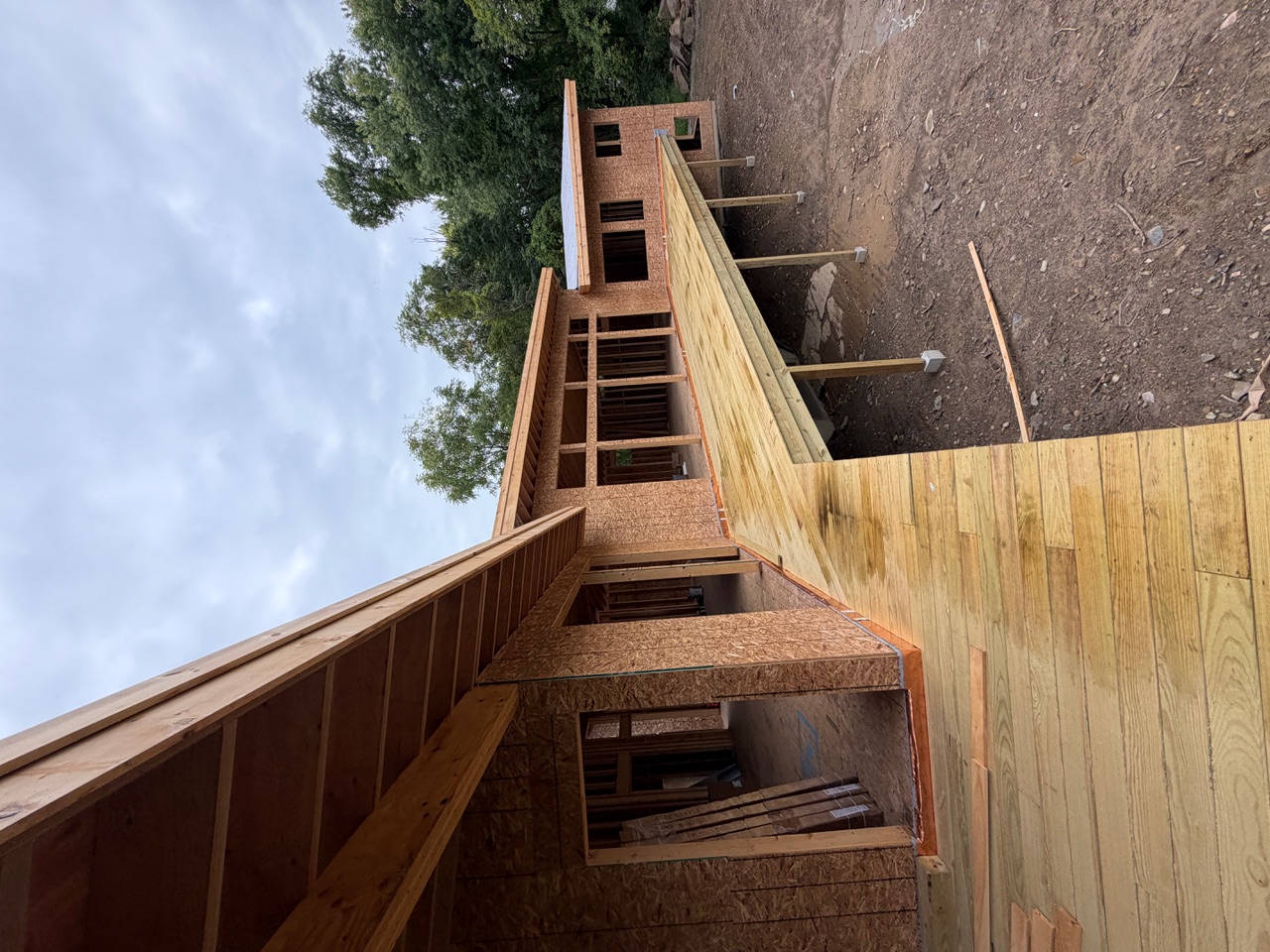
On the home building front, we are moving right along with our projects. Down a few men, which has slowed us down a little, plus well-earned vacation time. But a slower calibration as winter approaches is fine, perhaps for the long run. Solving some big-picture problems that were weaved into my everyday routine, nipping away at them, one dead end after another, pivoting, creative problem solving - never stress free and many times quite stressful, hard to put away at the end of the day, and solved over months not hours or days or weeks.

We have our modern masterpiece moving towards closing - which was an interesting test of my discipline of ‘one in the hand is worth two in the bush’ as we got an offer directly (sans realtor), before we furnished, before we marketed, before exploring what the market might hold in store for such a product - in lieu of the exploration, we have a solid deal with lovely people, a 7 day contract turnaround, a 40 day closing date and monetization of the 12+ month project. So I swapped what might have been with what was - taking out the guesswork, allowing macro planning for the business that is bigger than any one house. Like I’ve said a lot, the amount of money I’ve left on the table over the course of my career is huge, but at the same time, it appears to be true that it has always allowed a quick sale of our homes, keeping the cash flowing, and the confidence in our ability to build and sell strong.